Trainer instructions manual
Quick Start Guide
1. Choose a training drill
2. Select a SELF tool (goal setting, planning, monitoring, evaluation, reflection)
3. Let players choose their personal goal
4. Decide the number of players for feedback (start with a smaller group of 6–8 players, preferably the same ones each session)
5. Observe the drill without interrupting
6. Finish with a short reflection or evaluation
Why use this toolbox and what’s in it for you?
Direct instruction and feedback from trainers are effective ways for youth athletes to learn and refine their skills. However, to become independent, resilient, and motivated learners, athletes also need to take an active role in their own development.
This means learning to:
◦ Set their own goals
◦ Plan how to achieve them
◦ Monitor and evaluate their progress
◦ Make mistakes
◦ Reflect on mistakes and successes
As such, they receive feedback on their learning process from both you as the trainer, as from themselves.
We call this process self-regulated learning (SRL). Research shows that youth athletes who use SRL skills during training sessions:
◦ Learn faster
◦ Enjoy their sport more
◦ Build stronger self-confidence and self-efficacy
That’s what you want, right?
The SELF Toolkit helps you as a trainer to teach SRL skills in a playful, sports-specific way. Instead of writing reflections (as often done in schools), athletes use engaging on-court tools to become great self-regulated learners.
In short: SELF - train the mind, grow the player.
So, what’s in it for you?
In the short term it will mean you need to get used to some new way of training and players have to get used to it. But in the mid/long term you will see that your team will be much more autonomous and they will learn that in sport (and live) it pays off to set your own goals, monitor your progress and evaluate and learn. Don’t worry, they will still need you as their trainer/coach but your team will simply grow faster ;-)
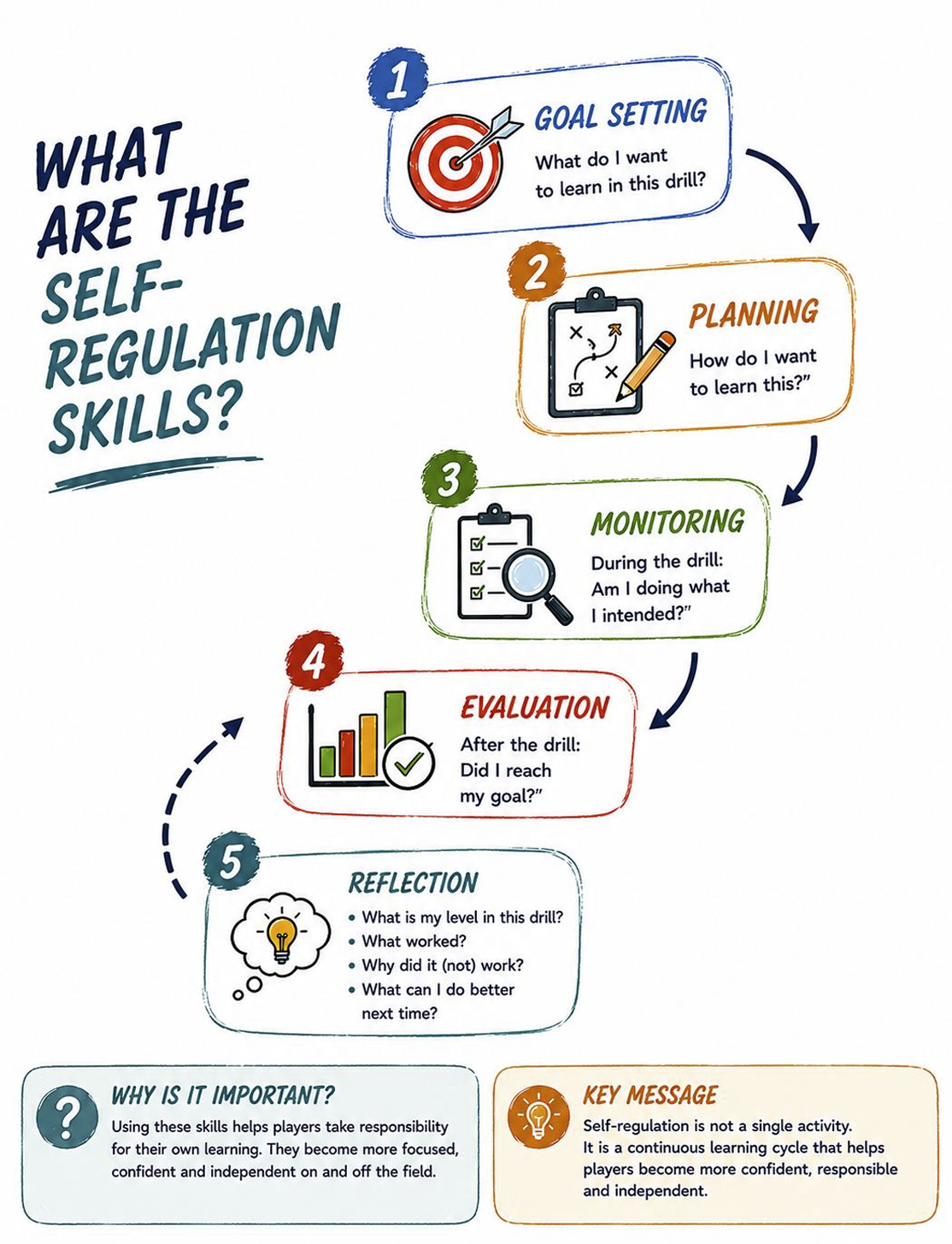
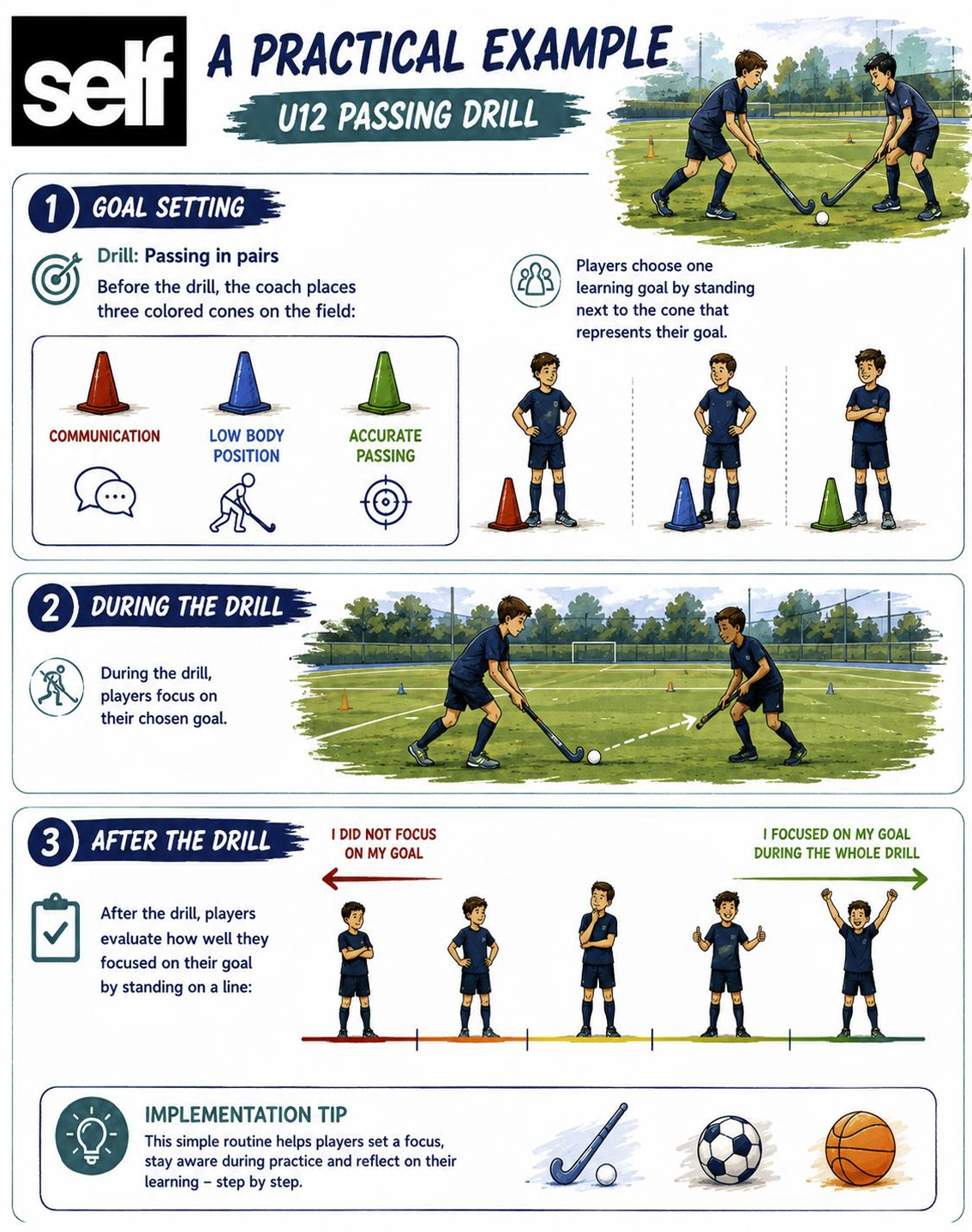
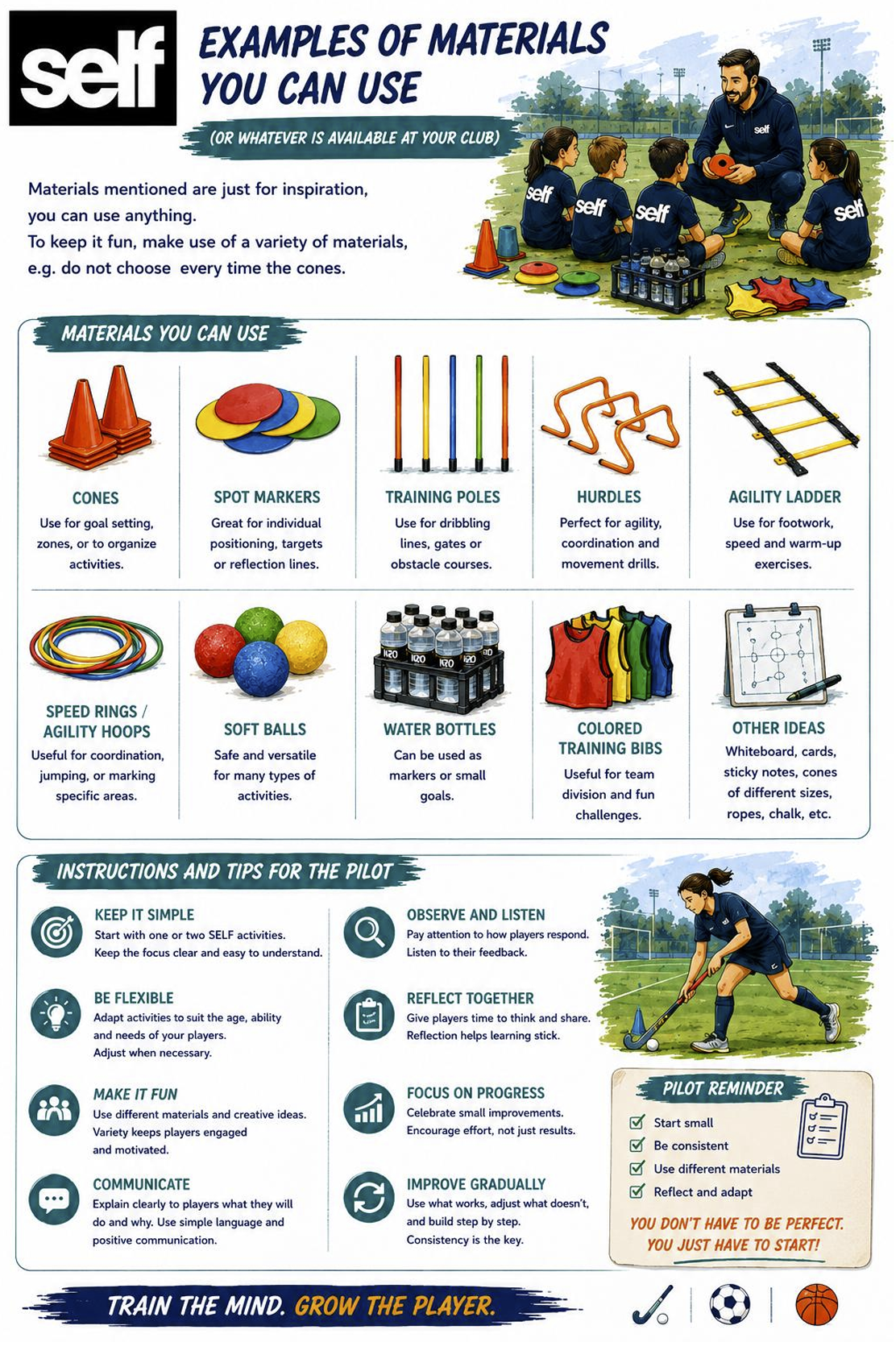
In the toolbox you will find self-regulation tools. You add one such tool to your sport- specific drills (passing, shooting, defending, etc.) in your training sessions.
So you get for example:
- a passing drill where you add a SELF goal setting tool
- a shooting drill where you add a SELF reflection tool
- a defence drill where you add a SELF evaluation & reflection tool
Number of players:
You can test the pilot with all players in the training. However, you can decide to ask the feedback to a smaller group of 6 to 8 players, preferably the same ones in all practices. This way it will be easier for you to pilot the tools as it can be overwhelming doing this from the start with e.g. 15 kids who are not used to this.
Frequency and target:
◦ Use at least one of the tools in a minimum of 2 training sessions per week during the pilot period
◦ In each training session, use one SELF tool twice (not in every drill)
◦ Focus on one SELF tool per training session
Pilot Target:
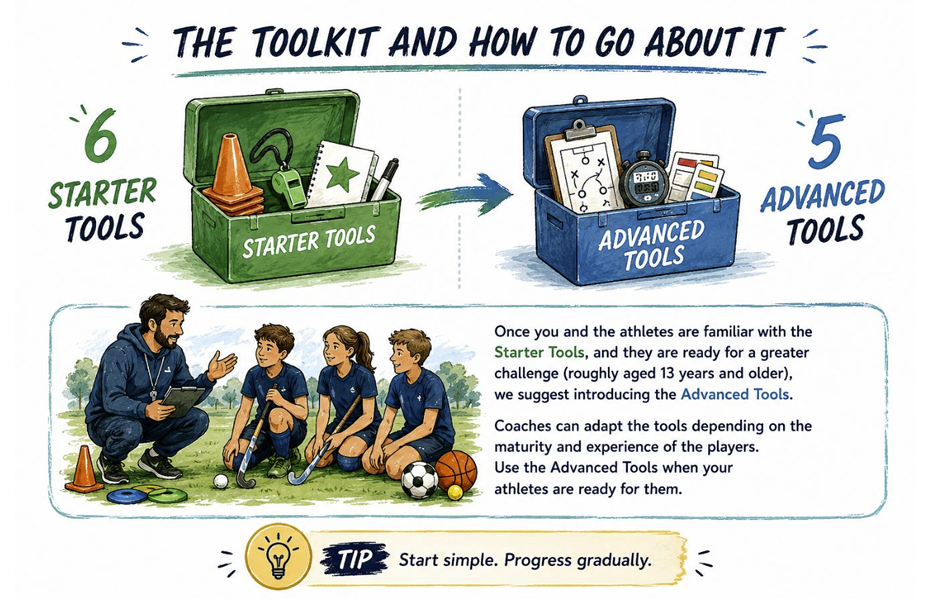
Apply at least one set of skills: either a minimum of 6 basic tools (across 12 exercises) or 5 advanced tools. This should result in applying at least 6 skills over 6 training sessions between now and January 2026, when the pilot concludes. You may follow the suggested order of tools or adjust it as needed. The national coordinator will assign skill sets to ensure both levels are tested.
After Training:
◦ Collect brief feedback from 6–8 players on their experience with the implemented tool
◦ Record observations and findings using the SELF tools
◦ Complete the questionnaire, ensuring all multiple-choice questions are answered; responses to open questions are encouraged